End of the Cold War William C. The dominant version of realism neorealism is developing in.
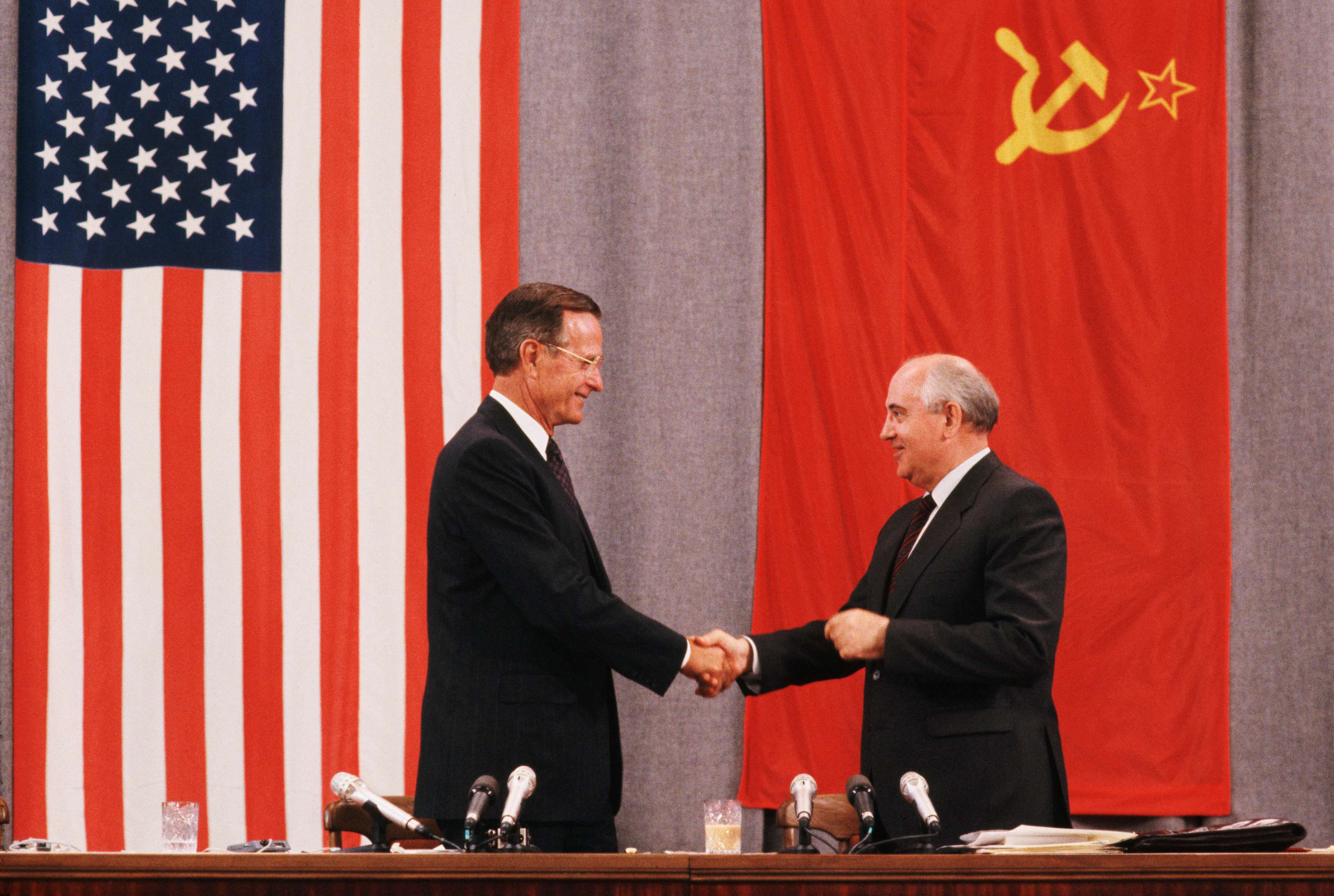
Ending The Arms Race With A Start U S National Park Service
Up to 24 cash back Causes of the End of the Cold War.

. Which choice best explains why President Reagan decided to take a more aggressive approach against the Soviet Union. Second it will assess if neorealisms or social constructivisms core arguments can better explain three important dynamics of the Cold War namely bipolarity. The Cold War was waged on political economic and propaganda fronts and had only limited recourse to weapons.
The dominant version of realism neorealism is developing in new directions in an attempt to address major areas where the theory has been shown to contain weaknesses eg. It is common knowledge that the Cold War primarily came to an end with the dissolution of the Union of Soviet Socialist Republics USSR. The question is often debated about what theory best explains the cause for the cold war.
However realism has also come under scrutiny after the end of the Cold War and constructivism appears to be one of the biggest beneficiaries. The domino theory was a Cold War policy that suggested a communist government in one nation would quickly lead to communist takeovers in neighboring states. They are all driven by Western theorists and they look at nations as the basic units of.
End of Cold War would mean their end of their influence and loss of power. Some results of this process are already apparent. However there is a common thread that runs through all the tapestries and theories of international relations from the end of WWI to date.
IR theory after the Cold War GEORG S0RENSEN The end of the Cold War has prompted a good deal of soul-searching in the academic discipline of International Relations IR Some results of this process are already apparent. What are two effects that the end of the Cold War had on the United States-The drop in military spending sent the United States into a recession. The removal of the metaphorical Iron Curtain meant that the citizens living in the West of the curtain now could have all information about the economic social and political conditions of the people living on the Eastern side of.
Human rights ideas and the end of the Cold War One of the key ideas caused changes in Soviet domestic and foreign policy under Gorbachev is that of human rights. Soviet economy was near collapse promoted Gorbachev to introduce reforms and end the arms race expensive commitment to the war in Afghanistan. It is often argued whether or not one explanation does the best job at explaining the Cold War.
Independence movement in the Eastern bloc. The fall of the Berlin Wall the reunification of Germany and the dissolution of the Soviet Union. And the end of the Cold War.
These three theories are. The disagreement is often between about what forces pushed for the struggle between the United States and the Soviet Union for power. Morgenthau put forward the first comprehensive modern theory of inter- national relations-and the one from which most subsequent theories in that field have evolved-in his 1948 book Politics among Nations.
The Struggle for Power and. Three significant events heralded the end of the Cold War. As the Cold War intensified the United States developed new foreign policies including the domino theory which became a foundation of American foreign policy.
The collapse of great-power cooperation after World War II helped establish it as the dominant approach to the theory and practice of international politics in the United States. The alliance behaviors of states. Its implications for the sustainability of American hegemony through hegemonic conception of control raw materials sources of financial capital flows and competitive advantages no longer applies to.
Containment was a foreign policy of the United States of America introduced at the start of the Cold War aimed at stopping the spread of Communism and keeping it contained and isolated within its current borders of the Union of Soviet Socialist Republics USSR or the Soviet Union instead of spreading to a war-ravaged Europe. Wohlforth iNlodern realism began as a reaction to the breakdown of the post-World War I international order in the 1930s. The fall of the Berlin Wall prompted the removal of borders between East and West Germany while West German chancellor Helmut Kohl began pushing for the reunification of the two states.
USSR spent 4 billion a year to Cuba 6 billion to Vietnam 3 billion to Eastern Europe. Theory and the End of the Cold War 7 Hans J. Cold War the open yet restricted rivalry that developed after World War II between the United States and the Soviet Union and their respective allies.
In 1945 English writer George Orwell first used the term cold war in a published. To others it is the most ludicrous theory humanity ever put into full-scale practice. However the focus will be on the one theory which is the most relevant in providing an explanation to the rationale behind the war.
1989 Poland CzechoslovakiaRomania independent Hungary opened border to. The end of the Cold War has prompted a good deal of soul-searching in the academic discipline of International Relations IR. The second theory holds economic pressures on the USSR due to competition with the USA culpable for the end of the Cold War.
It will then conclude that social constructivism is most convincing in explaining the Cold War. The evolution of the Cold War between the United States and the Soviet Union initiated a new US. To many mutually assured destruction helped prevent the Cold War from turning hot.
The theory of hegemonic stability initially formulated by Kindleberger has been widely discussed and revised since this no longer explains the scenario that followed the Cold War. In the first years after 1945 the United States hastily demobilized its wartime military forces while pursuing universal liberal internationalist solutions to problems of security and. Although ideas belong to constructivist approach Gorbachevs desire and readiness to respect and promote human rights can also be explained by realist approach.
The theory of realism can explain the Cold War if the Cold War itself is considered to be the end of an era of political and international relations theory the closing of a chapter if you will as the wave of new-found cooperation between post-war allies with the sole intention of pursuing mutually beneficial economic development embodied by the European Union. Denunciation of the Brezhnev doctrine allowed independence movement within the Eastern bloc as there was no fear of Soviet military interference. The term was first used by the English writer George Orwell in an article published in 1945 to refer to.
In retrospect the course of the Cold War appears to have been cyclical with both the United States and the USSR. The third theory illustrated by realists analyses the contribution of internal factors leading to the collapse of the Soviet Union and the final theory illustrates the peace through strength thesis I believe that all the theories are strongly linked. The name and acronym of MAD come from physicist and polymath John von Neumann a key member of the Atomic Energy Commission and a man who helped the US develop nuclear devices.
Alternating between periods of assertion and relaxation. The end of the Cold War.
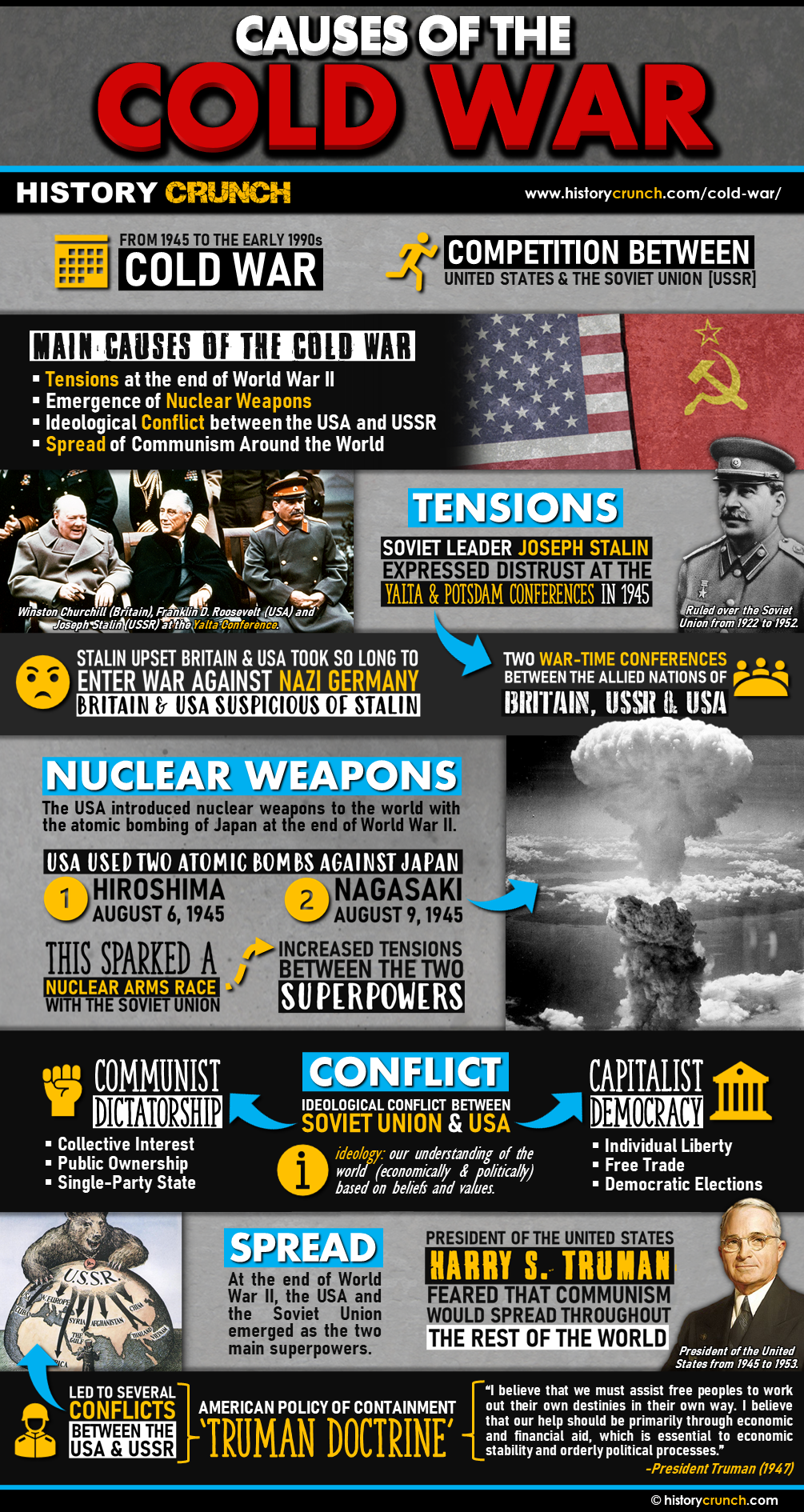
Causes Of The Cold War History Crunch History Articles Biographies Infographics Resources And More
The End Of The Cold War Ushistory Org
The End Of The Cold War



0 Comments